
Asphalt Paving
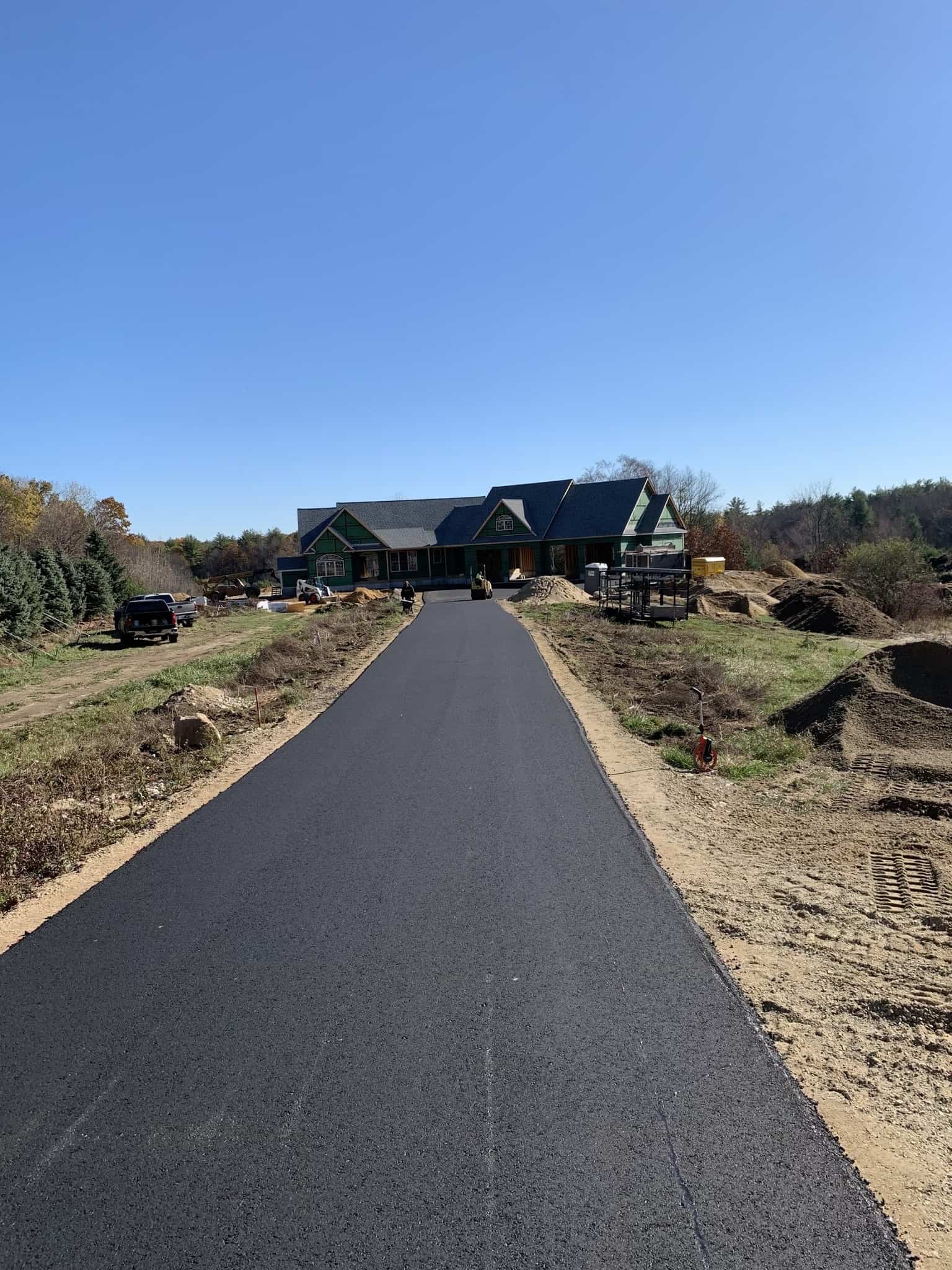
Subdivision streets, private lanes, golf cart paths, and the wide flat surfaces that need a paver and a roller crew to do them justice.
Asphalt is the workhorse of paved surfaces in Northeast Florida. It's cheaper than concrete to install, faster to put down, easier to repair, and when it's built on a solid base it can absorb the daily abuse of cars, trucks, and afternoon thunderstorms for two decades or more. The trick is knowing when to spend the money on prep and when not to.
Whether the job is a half-mile rural lane, a path connecting two buildings on a school campus, or the loop road through a new HOA development, the same questions decide whether it lasts: how much weight is rolling over it, where does the water need to go, and what's the soil underneath actually doing? We answer those before we ever pull a paver onto the property.
How the job rolls out
- Site walk and quick soil check, plus a written number on the spot
- Slope and runoff plan so water leaves the surface, not sits on it
- Cut, haul-off, and subgrade compaction where needed
- Aggregate base built to the right depth for the load you'll put on it
- Machine-laid hot mix in one or two lifts depending on spec
- Steel-drum and rubber-tire rolling to lock the surface in
- Hand-finished edges and clean tie-ins to existing concrete or curbs
- Cure schedule and the maintenance steps that keep it looking new
Equipment-wise we're set up for everything from a 200-foot footpath to a long industrial access road. Whatever the size, the same crew runs the job from first stake to final roll.
Why Hire Us
What you actually get when you book us
Spec'd for the load it'll see
A retirement community road and a delivery dock approach are not the same job. We pick base depth and binder grade based on what's actually going to drive over it, not a default catalog spec.
One crew, no handoffs
The same people who quote the job own the cut, the base, the pour, and the rolling. There's no subcontractor mid-project to point fingers at if something feels off.
Pavement built for here
Sandy subgrades, high water tables, and afternoon downpours behave nothing like what northern paving manuals describe. Our methods are tuned for what the Northeast Florida ground actually does under a fresh lift of hot mix.
Common Questions
Asphalt paving FAQ
Tell us what you're trying to pave
Send us a quick note or pick up the phone. We'll come walk the site, talk through the right spec, and write you a real number with no obligation either way.